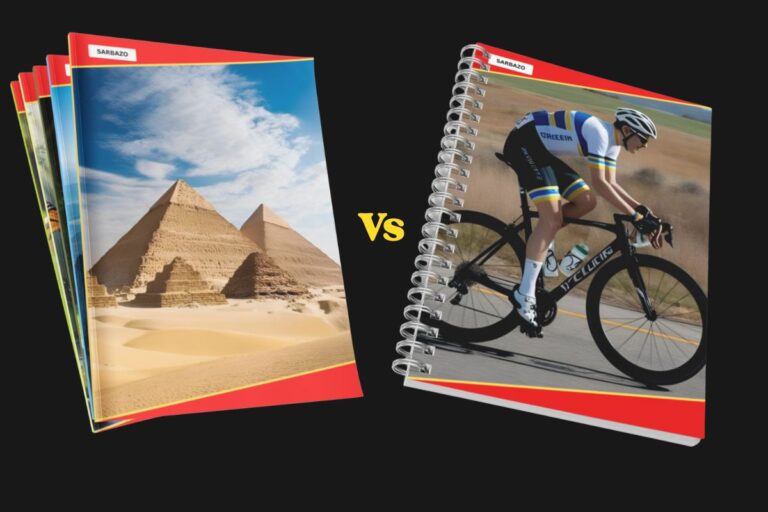
Here’s a question I hear from importers every week: “Should I focus on exercise books or spiral notebooks?”
The honest answer? It depends entirely on your market.
After years of exporting both wholesale exercise books and spiral notebooks for offices and students to over 34 countries, I’ve seen clear patterns emerge. Some markets heavily favor one type. Others want both. And choosing wrong can leave you with slow-moving inventory.
Let me share what actually works in different markets—based on real orders, not assumptions.
The Core Difference: Function Over Form
Before comparing sales potential, let’s understand what makes each type distinct.
Exercise Books: The Educational Workhorse
Exercise books are saddle-stitched or perfect-bound notebooks designed primarily for academic use. They’re the backbone of school supplies in most developing markets.
Key characteristics:
- Fixed page count (typically 40-200 pages)
- Lower production cost per unit
- Compact, stackable design
- School-specific ruling options (single line, four line, square)
- Bulk-friendly for government tenders
Spiral Notebooks: Versatility Wins
Spiral notebooks use metal or plastic coil binding, allowing pages to lay flat and rotate 360 degrees. They serve both educational and professional markets.
Key characteristics:
- Lay-flat design for comfortable writing
- Pages can be torn out cleanly
- Higher perceived value
- Popular in corporate and retail segments
- More customization options for branding
Market Demand: Where Each Type Dominates
Understanding regional preferences helps you stock what sells. Here’s what our export data shows across different markets.
Markets Where Exercise Books Dominate (70%+ of Orders)
African Educational Markets: Ghana, Kenya, Tanzania, and Nigeria order exercise books in massive volumes. Government school programs and back-to-school seasons drive demand. These markets value cost-effectiveness—parents need affordable options for multiple children. A typical order might include 50,000 to 100,000 exercise books per container.
Why exercise books win here:
- Lower price point matches budget constraints
- School tender requirements favor standardized formats
- Bulk purchasing for academic terms
- Simple, durable design for daily classroom use
Markets Where Spiral Notebooks Lead (60%+ of Orders)
Middle East & Corporate Markets: UAE, Saudi Arabia, and corporate buyers globally prefer spiral notebooks. These markets associate spiral binding with quality and professionalism. Retail chains, office supply distributors, and corporate gifting programs favor spiral notebooks.
Why spiral notebooks win here:
- Higher perceived value justifies premium pricing
- Professional appearance for office environments
- Popular for meeting notes and presentations
- Better margins for retailers
Mixed Markets (Balanced Demand)
UK, Mexico, Guatemala: These markets buy both types in significant quantities. Schools need exercise books, but retail channels want spiral notebooks. Smart importers serving these markets stock both to capture different customer segments.
Explore our complete notebook range to see options for balanced inventory planning.
Profit Margin Comparison: The Numbers That Matter
Let’s talk money. Which type delivers better returns?
Exercise Books: Volume Game
Typical wholesale margins: 15-25%
Exercise books work on thin margins but high volume. A single container can hold 25,000-40,000 units depending on size. School supply seasons create predictable demand spikes. The key to profitability is winning institutional contracts and school tenders where volume compensates for lower per-unit margins.
Profit strategy: Focus on volume, target school tenders, build relationships with educational distributors.
Spiral Notebooks: Margin Game
Typical wholesale margins: 25-40%
Spiral notebooks command higher prices and better margins. A container holds fewer units (15,000-25,000 depending on specifications), but each sale contributes more profit. Retail channels and corporate buyers accept premium pricing for perceived quality and functionality.
Profit strategy: Target retail channels, corporate gifting, premium positioning.
The Verdict on Profitability
Exercise books generate profit through volume. Spiral notebooks generate profit through margin. The “better” option depends on your distribution channels and market access.
If you have access to school tenders and bulk institutional buyers: exercise books.
If you serve retail chains and corporate clients: spiral notebooks.
If you serve mixed channels: stock both.
Quality Considerations: What Buyers Care About
Quality expectations differ between the two types. Understanding these helps you specify the right products from your manufacturer.
Exercise Book Quality Factors
School buyers and parents care about:
- Binding durability: Pages shouldn’t fall out mid-term
- Paper quality: 60-80 GSM that doesn’t bleed through (see our paper GSM guide)
- Ruling accuracy: Consistent line spacing and margins
- Cover durability: Resistance to daily handling
Spiral Notebook Quality Factors
Office and retail buyers prioritize:
- Coil quality: Metal or plastic that doesn’t snag or deform
- Lay-flat performance: Must stay open without curling
- Perforation quality: Clean tear-out without page damage
- Cover finishing: Professional appearance matters
Our quality control process covers both types with three-stage inspection ensuring consistent standards.
Customization Opportunities: Adding Value
Both notebook types offer customization potential, but opportunities differ.
Exercise Book Customization
Common requests:
- School logos and names on covers
- Custom ruling patterns for specific curricula
- National flag or institutional branding
- Standardized colors for different subjects
Value-add: Schools pay premium prices for branded exercise books. This turns a commodity product into a differentiated offering.
Spiral Notebook Customization
Common requests:
- Corporate logos for employee notebooks
- Custom cover designs for retail differentiation
- Branded notebooks for promotional campaigns
- Specialty ruling (dotted, graph, blank)
Value-add: Corporate clients order custom spiral notebooks for events, onboarding, and gifts. These orders often repeat annually.
Seasonal Demand Patterns
Timing your orders matters. Both types have distinct seasonal patterns.
Exercise Books
Peak seasons:
- Back-to-school periods (varies by country)
- January-March for most African markets
- August-September for European and Middle Eastern markets
- Government tender announcements
Plan orders 3-4 months ahead to ensure timely delivery before school terms begin.
Spiral Notebooks
Peak seasons:
- Year-round for office supplies (steady demand)
- October-December for corporate gifting and new year planners
- Q1 for annual corporate purchasing cycles
Spiral notebooks offer more stable year-round demand, making inventory planning easier.
Making Your Decision: A Simple Framework
Use this framework to decide your product mix:
Choose exercise books if:
- Your primary market is educational institutions
- You compete on price in developing markets
- You have access to government tenders
- You want high-volume, predictable orders
Choose spiral notebooks if:
- Your primary market is retail or corporate
- You compete on quality and features
- You serve developed markets with higher purchasing power
- You want higher margins per unit
Choose both if:
- You serve mixed channels
- You want to diversify revenue streams
- Your market has strong school and corporate segments
- You want to maximize container utilization with mixed orders
Next Steps: Test Before You Commit
Before committing to large orders, test your market’s response. Request samples, share with potential buyers, and gauge interest before scaling.
Ready to explore both options? Request samples of both types to compare quality firsthand. We can also share detailed specifications to help you make informed decisions.
If you’re entering new markets, consider our export services designed specifically for first-time importers navigating unfamiliar territory.
The “right” notebook type isn’t universal—it’s the one your market actually buys. Understanding your customers’ preferences, price sensitivity, and usage patterns will guide you to profitable decisions.
Questions about which products suit your specific market? I’m happy to share insights from our experience exporting to your region.